
When I first started using Google Drive I saved everything at that place. Class projects, presentations for work, notes from meetings, resumes, recipes, and family unit mailing lists. You name it—all of my files lived in my Google Drive considering of how piece of cake it was to admission and share them there.
Still, the longer I used Google Drive, the more I used it while juggling unlike accounts (school, personal, and piece of work). So, inevitably, I lost track of where some of my favorite files were located. Just and then I faced a real challenge: My university announced they would shortly be deleting my year's academic Google Accounts. I realized, every bit I considered this change, that a lot of important files and emails were on that account that I absolutely needed.
Whether controlled by work, school, or your housemate, Google Accounts are not permanent. Depending on the type of account you have, or who controls it, you may suddenly only accept express admission to the account; you might lose your passwords and non accept access to the means to reset them; the domain might lapse and get picked up by someone else; or, at the farthermost terminate, your account could be hacked.
So whether you want/need to leave your Google Account for a new service, or you just desire to save a re-create of all your Google data to a second source, you lot need to understand how one retrieves and backs up content from a deject sync service. We've outlined some elementary steps for yous to accomplish that, hither.
An Update on Your Google Docs Trash Folder: Starting on Oct 13, 2020, Google Bulldoze volition begin automatically deleting files after they have spent xxx consecutive days in the trash. Previously, any trashed files would remain in Google Drive until they were permanently deleted by the user. This update matches the deletion policy already in identify for Gmail and G Suite services.
Like me, you may non have known that all your deleted files remained in Google Drive trash. I constitute some files in at that place that I had no idea I deleted and was so happy to think, download, and save. Earlier Oct xiiith, 2020 you should take a moment to download files that may exist deleted if you lot want to go along them before they are gone forever.
How to Download from Google Drive
Log in to the Google Account you would similar to copy your data from.
On average, people have two e-mail accounts, so it is of import to make certain you lot are logged in to the correct Google Account before you lot offset this procedure. One time signed in, you will want to go to Google Drive itself: drive.google.com. From there, click on the summit right corner of the folio where your business relationship profile prototype is located and a drop-down menu (like the one pictured below) volition announced.
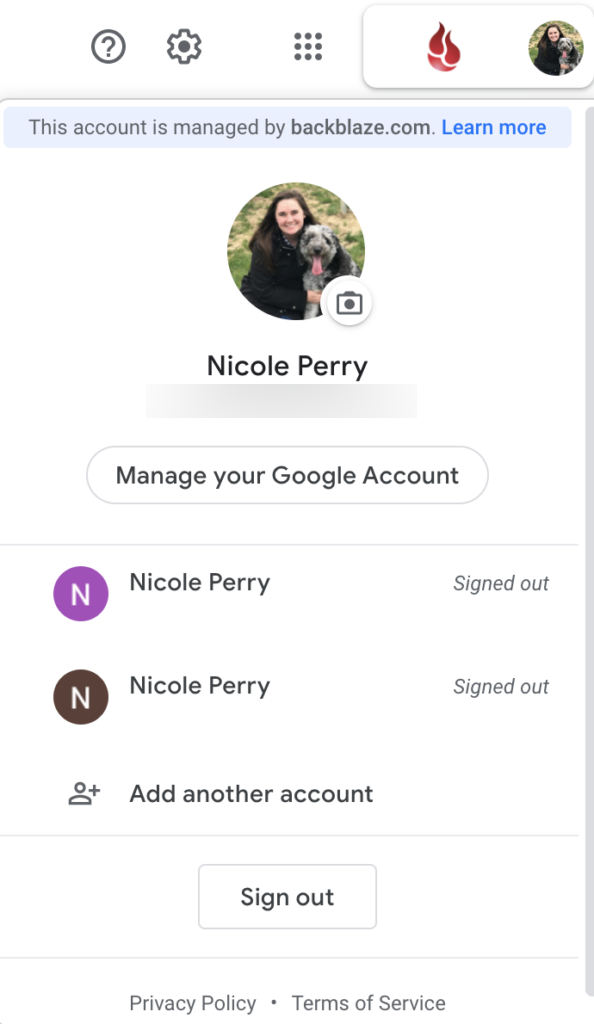
Select "Manage your Google Account" and yous will be led to a new page where you lot volition have four unlike options to choose from. Select the section labeled "Privacy & personalization." This is where y'all volition run across what data, activity, and preferences your Google Account has associated with it. From hither you lot want to select "Manage your information & personalization" which volition bring you to the page where you can download your information.
Once you get to the new page, scroll downwards to the department labeled "Download or delete your data" and select "download your data." This will lead you to a new website named Google Takeout. Here, you can export a re-create of the content in your Google Business relationship to keep on a local storage source. A reminder before we become forward: this is going to download your data, but it does non delete it from your Google Account.
Select the information you want to download.
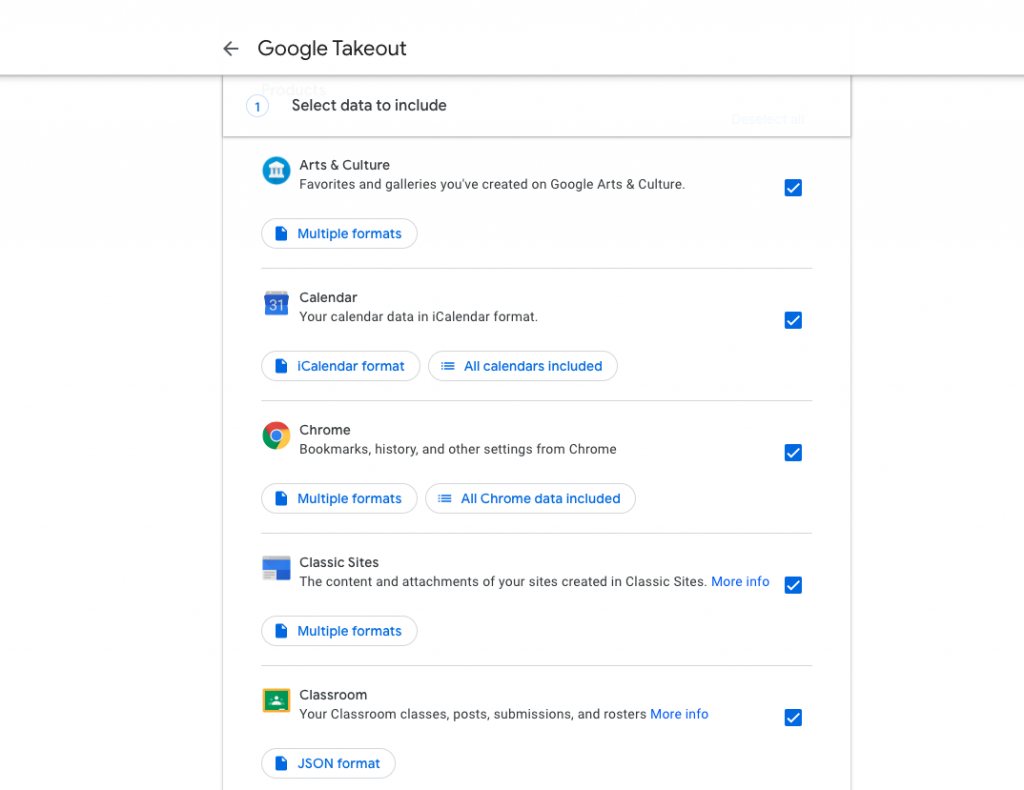
On this folio, you tin select to download an archive of your Google Bulldoze and too your Chrome bookmarks, transactions from various Google services, locations stored in Google Maps, Google Bulldoze contents, and other Google-related products you may use.
When most people think about downloading the information they store in Google Drive, they're thinking about the documents, photos, and other larger files they work with, but as Google Takeout makes clear: Yous take a lot more data stored with Google exterior of Drive.
Hither's why you might choose to consign everything: to accept a copy of bookmarked websites, to have a copy of emails that may contain files you lot've lost over time, or to have a copy of important voicemails from loved ones in Google's Vocalism product that yous want to keep forever. Also, when you download all of your data information technology is a good reminder of what information Google has on you.
Decide how you would like your files to be delivered.
Once yous take decided what parts of your Google data y'all would like to download, you will have to pick what file blazon you would like it sent as, the frequency you would like this action to happen (example: if yous would like your information to be downloaded every 6 months this is where you tin can gear up that to happen), and the destination you would like your data to be sent to.
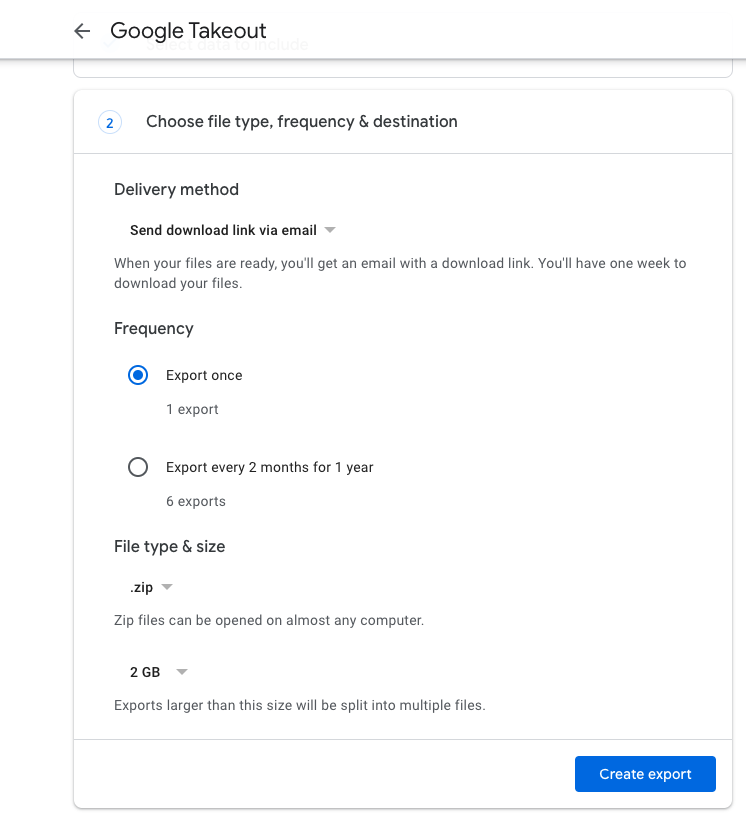
When picking a destination for where your information will be sent once you download information technology, you tin can cull from having the files emailed to you or sent to a sync service (if you lot use ane) similar Dropbox or OneDrive.
Depending on the size of your data, Google may transport you multiple emails with different sizes of files. You can choose to have these files sent equally a .zip file or a .tgz (tar) file. The main divergence between the two options is that a .zip file compresses every file independently in the archive, but a .tgz file compresses the archive equally a whole.
What to do once you accept your data in your inbox.
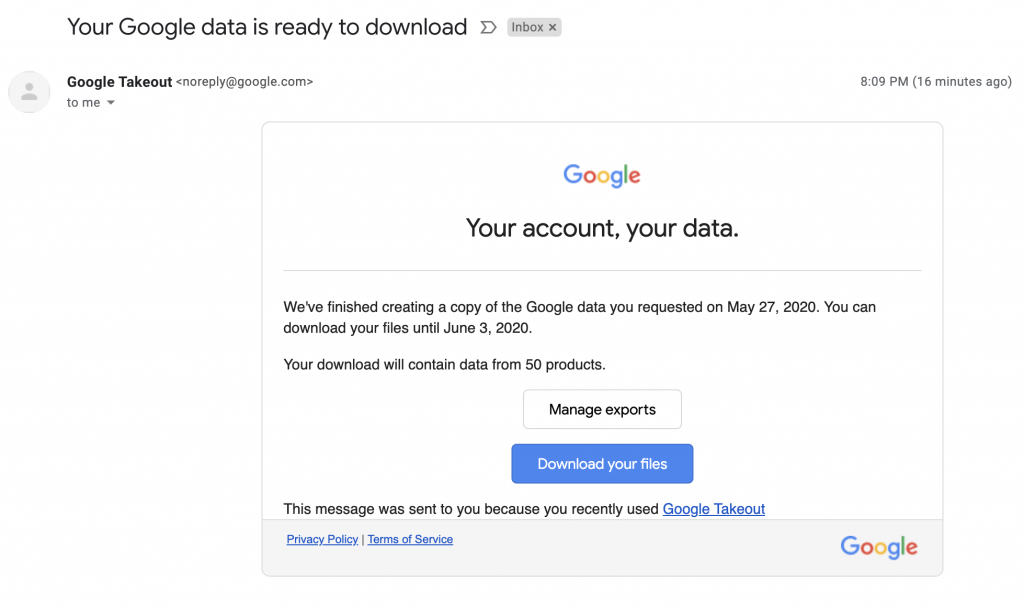
An e-mail will appear in a few minutes, hours, or a couple of days (depending on the size of data you are downloading), informing you that your Google data is set up to download. Once you take this email in your inbox, you accept a week to download the data. Click the "download your files" button in the email and—presto—y'all will have a .aught file or a .tgz file (depending on what blazon of file you picked) on your figurer with your Google information.
Backing Up Your Google Drive
You at present have your data with all of your of import work out of the Google cloud and on to your operating system. What'southward adjacent? Protecting your newly downloaded Google information with a good deject backup strategy should exist the adjacent thing you exercise.
Make sure to have at least two backups: i local, on your desktop or on a hard drive, and one in the cloud. (The discussion "cloud" may be disruptive since you just had your data in a sync cloud service but we've found a simple way to ascertain sync vs. fill-in.) Having two (or three) backups of your newly downloaded information ensures that you will never lose those projects you spent hours working on.
Do you have whatever techniques on how you download your data from Google Drive or other Google products? Share them in the comments section below!
DOWNLOAD HERE
Posted by: bissonetteraiddece.blogspot.com